

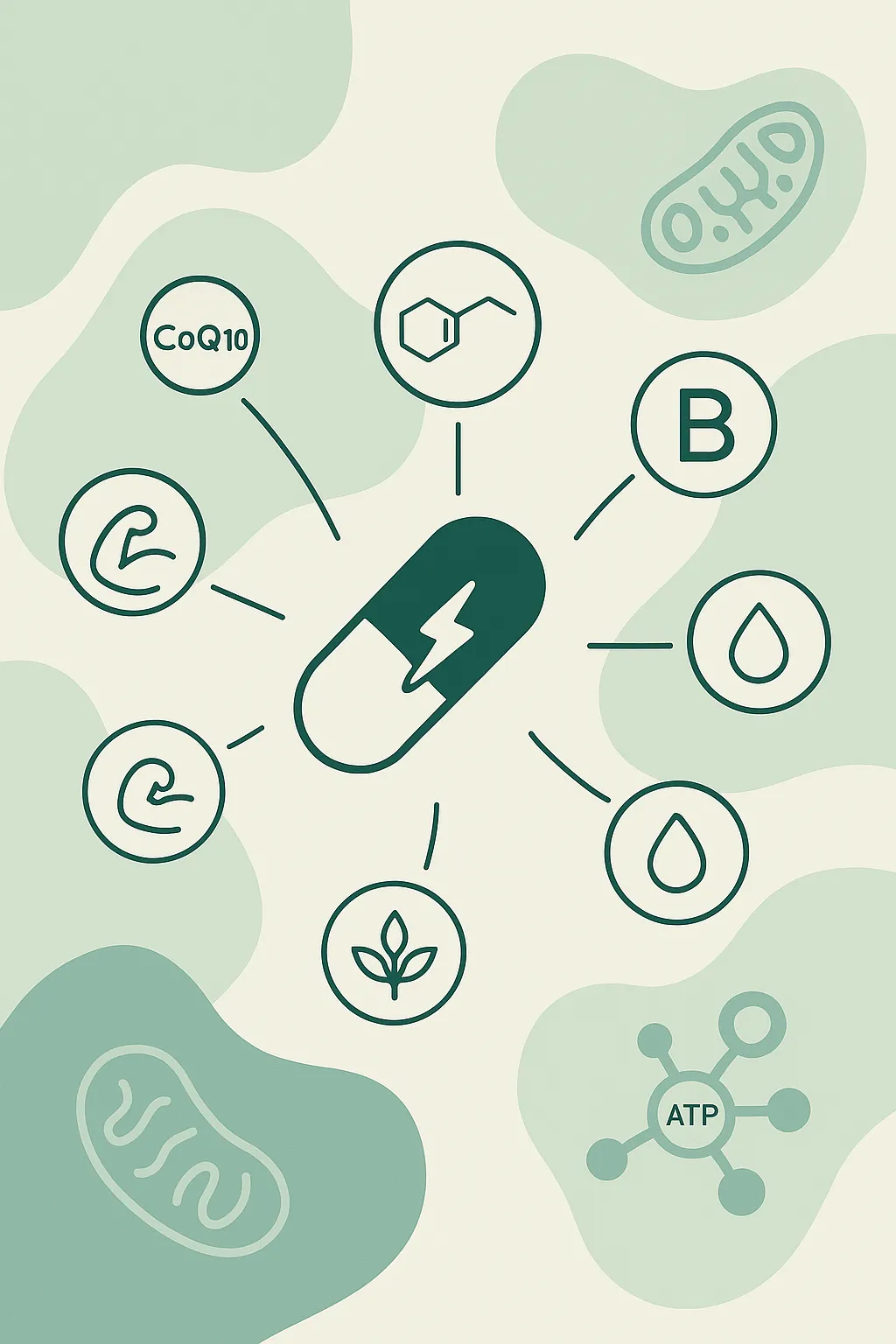
Fatigue is one of the most common complaints among adults, affecting productivity, mood, and overall quality of life. While lack of sleep and stress play major roles, many cases of chronic fatigue are linked to mitochondrial dysfunction, nutrient deficiencies, hormonal imbalances, and impaired stress response.
As research expands in the field of cellular energy, several supplements have emerged with strong scientific support. This guide analyzes what actually works in 2025, supported by studies, mechanisms of action, and recommended dosing.
Understanding Energy From a Biological Perspective
The human body relies on ATP production inside mitochondria to generate energy. When ATP output is low, symptoms of fatigue, brain fog, and low motivation appear even when sleep is adequate.
The most common biological causes of chronic fatigue include:
- Low B vitamins and low iron/ferritin
- Poor mitochondrial function
- Thyroid dysfunction
- Chronic stress and cortisol dysregulation
- Inflammation
- Low creatine stores
- Reduced NAD+ availability
The supplements reviewed in this article target one or more of these pathways.
CoQ10 (Ubiquinol): One of the Most Effective Mitochondrial Boosters
CoQ10 is essential for electron transport chain function inside mitochondria. Low levels are strongly associated with fatigue, reduced endurance, cardiovascular issues, and aging-related decline in energy.
The ubiquinol form is significantly more bioavailable than ubiquinone.
Benefits:
- Increases ATP production
- Improves cardiovascular energy output
- Reduces oxidative stress
- Useful for statin-induced fatigue
Dosage: 100–200 mg daily
Evidence Level: High
Creatine Monohydrate: The Most Proven Physical and Cognitive Energy Enhancer
Although known for athletic performance, creatine is also a potent brain energy supplement. It restores phosphocreatine stores, acting as a rapid energy buffer for cellular function.
Multiple studies show improvements in mental fatigue, cognitive performance under stress, and overall vitality.
Benefits:
- Increases ATP availability in muscles and brain
- Reduces perceived fatigue
- Supports cognitive performance
Dosage: 3–5 g daily
Evidence Level: High
NAD+ Precursors (NMN, NR): Promising but Still Developing
NAD+ levels decline with age and stress, impacting mitochondrial repair and metabolic efficiency. Precursors like NMN (nicotinamide mononucleotide) and NR (nicotinamide riboside) have shown promising results in improving energy, metabolic health, and fatigue.
However, research is still evolving.
Benefits:
- Supports mitochondrial recovery
- Enhances cellular metabolism
- Reduces biological stress markers
Dosage: 300–600 mg daily
Evidence Level: Moderate to High
B-Complex Vitamins: Foundation for Metabolic Energy
B vitamins are essential for energy metabolism, neurotransmitter synthesis, red blood cell production, and methylation. Deficiencies in B12 or folate are strongly linked to fatigue and cognitive impairment.
Benefits:
- Restores baseline energy levels
- Supports nervous system function
- Improves mood and cognition
Dosage: One high-quality B-complex daily
Evidence Level: High
Iron (for those deficient): A Critical Factor Often Overlooked
Iron deficiency is one of the leading causes of fatigue worldwide, especially in women. Supplementation should only occur after testing iron, ferritin, and TIBC.
When deficient, correcting iron levels dramatically improves energy and stamina.
Benefits:
- Supports oxygen transport
- Restores endurance
- Reduces chronic exhaustion
Dosage: 20–40 mg elemental iron (only if tested)
Evidence Level: High
Adaptogens (Rhodiola, Ashwagandha, Ginseng): Stress-Resilience Boosters
Adaptogens enhance the body’s ability to manage physical and emotional stress, which directly affects energy output.
Most effective options:
- Rhodiola rosea
- Panax ginseng
- Ashwagandha (KSM-66 or Sensoril)
Benefits:
- Improves resilience to burnout
- Reduces cortisol dysregulation
- Enhances physical and mental stamina
Dosage: 200–600 mg depending on the extract
Evidence Level: Moderate to High
L-Carnitine and Acetyl-L-Carnitine (ALCAR): Strong Support for Cellular Energy Transport
Carnitine plays a crucial role in transporting fatty acids into mitochondria to be converted into energy.
ALCAR additionally supports cognitive performance.
Benefits:
- Improves mitochondrial fat oxidation
- Supports brain energy
- Helpful for age-related fatigue
Dosage: 500–1500 mg daily
Evidence Level: Moderate
Electrolytes and Hydration: The Simplest Fix for Daily Fatigue
Dehydration and low electrolytes are incredibly common causes of low energy, particularly in individuals who exercise, take caffeine, or follow low-carb diets.
Key electrolytes:
- Sodium
- Potassium
- Magnesium
Benefits:
- Improves physical energy
- Reduces headaches and brain fog
- Supports nervous system function
Dosage: 800–2000 mg electrolytes daily
Evidence Level: High
What Does Not Work Well for Energy
Several supplements remain popular but have weak evidence:
- Ginkgo biloba
- Maca (energy claims are mostly anecdotal)
- Low-dose ginseng gummies
- Taurine-only supplements (better in combination formulas)
Caffeine pills can provide short-term stimulation but worsen fatigue long term due to adrenal stress and sleep disruption.
Summary: The Best Energy Supplements of 2025
Based on current research, the most effective supplements for energy and chronic fatigue are:
- CoQ10 (ubiquinol form)
- Creatine monohydrate
- NAD+ precursors (NMN or NR)
- B-complex vitamins
- Iron (if deficient)
- Adaptogens (rhodiola, ginseng, ashwagandha)
- L-carnitine / ALCAR
- Electrolytes
These compounds target the root causes of fatigue and support both physical and cognitive energy.